The Spruce— August 2026
Kitchen Cabinet Styles
The Spruce: 6 Kitchen Cabinet Styles Designers Say Can Make Your Space Look Tacky—and What to Choose Instead
By Sarah Lyon, Published on August 22, 2026
MEET THE EXPERT
Lesley Steinberg is the founder of Lesley Steinberg Interiors.
Emily Roose is the founder of Emily Roose Interiors.
KEY POINTS
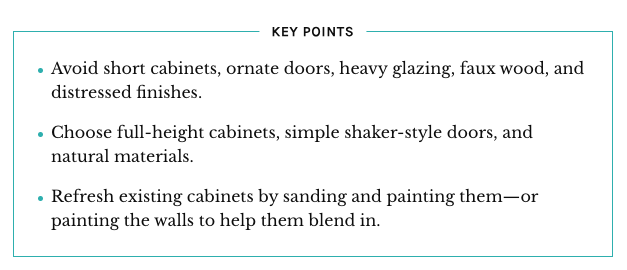
Avoid short cabinets, ornate doors, heavy glazing, faux wood, and distressed finishes.
Choose full-height cabinets, simple shaker-style doors, and natural materials.
Refresh existing cabinets by sanding and painting them—or painting the walls to help them blend in.
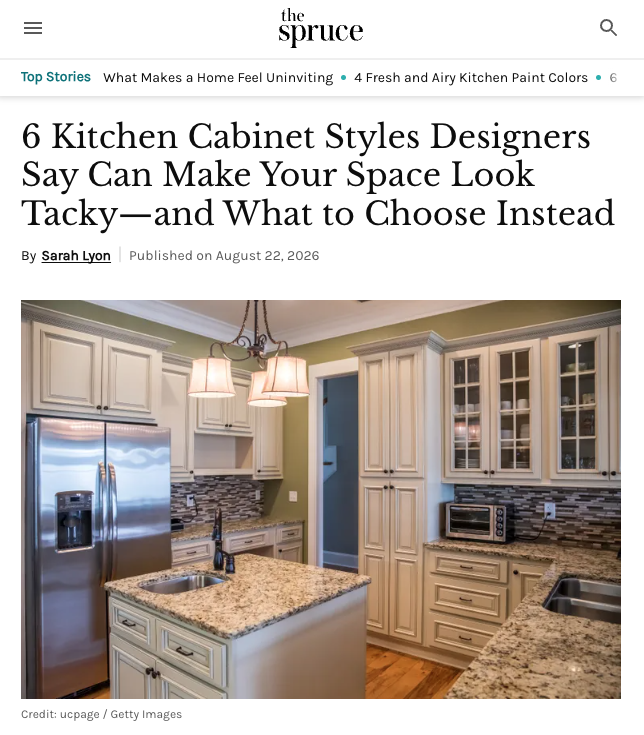
From cathedral-style door fronts to built-in lattice wine racks to engraved Tuscan motifs, many kitchen cabinet details read as tacky rather than sophisticated and are only going to make the entire room appear outdated as a result.
Below are five cabinet styles, in particular, that designers say have fallen to the wayside (and no, oak is not included!), and the designers also have valuable solutions for how to enhance your kitchen and bring it up to date.
Much like with high-water pants or curtains that stop too short of the floor, cabinets that don’t stretch up to the ceiling just look off, proportionally.
“They often create an awkward empty space that can make the room feel less custom,” Lesley Steinberg, founder of Lesley Steinberg Interiors, says.However, cabinets mounted lower on the wall used to be commonplace, so chances are your home might have them, but don’t panic if you’re not ready for a full cabinet re-installation.“Adding a soffit, decorative molding, or even painting the wall above the cabinets the same color can help create a more intentional, finished look,” Steinberg suggestsSteinberg says cathedral-style raised panel doors are outdated—but really, this extends to any overly ornate cabinet.“These details were popular in past decades but can overwhelm a space,” she says.Your best bet when designing a kitchen today? Opt for a clean shaker or slim-profile design, the designer says.
Kerrie Kelly, the founder of Kerrie Kelly Studio, echoes this.
“Today’s timeless kitchens tend to celebrate clean proportions, quality craftsmanship, and thoughtful restraint, allowing the materials and overall design to take center stage,” she says.
Glazing really depends on the color and the context—it can look really cool in some modern kitchens—but in general, you shouldn’t be able to look at a kitchen cabinet and see your reflection as if it were a mirror.
A glazed white cabinet can also feel clinical or doctors’ office-like.
“A subtle glaze can add depth and dimension to cabinetry when used thoughtfully,” Emily Roose, founder of Emily Roose interiors, says. When used in excess, though, glazing “often feels dated, competes with the rest of the finishes, and can make a kitchen look overly busy rather than refined.”
Steinberg says experienced DIYers can fix this with sanding and repainting.“Painting existing cabinets and removing heavy glazing can instantly give the kitchen a fresher, more timeless feel,” she notes.
Roose also dislikes cabinets that are made out of a faux wood veneer, citing many issues with its construction: It can peel, bubble, or chip quickly.
This will only “make a kitchen look worn and inexpensive,” she says. “Once the veneer begins to fail, it’s difficult to repair seamlessly, leaving the cabinetry looking neglected rather than timeless.”
While the distressed look was in vogue about a decade and a half ago, it’s now seen as more tacky than trend-forward.
In fact, Kelly says it feels “less authentic over time.”
“Instead, I encourage homeowners to choose natural materials and finishes that develop character through everyday use rather than manufactured effects,” she says.
Looking for materials that will patina gracefully in your kitchen? Choose brass hardware, natural stone countertops, or hardwood floors.